Taking words out of context and thereby thinking outside of the box

Keywords: media , advertising , brand , branding , brands , government , irrational media , law , propaganda , rational media , trademark , trademark law , trademarks , word , words

Whenever we say something we are in essence re-contextualizing the words we use in order to express our own expression. Words have been used since time immemorial. Ben Franklin had a self-imposed guide-rule to imitate Jesus and Socrates. Similarly, I wish to imitate Shakespeare insofar as I am time and again prone to invent new words, and perhaps I am also prone to use someone’s words and to transport them into different contexts. I do not wish to thereby alienate their meaning, but rather to consider whether their meaning also has implications outside of the contextual box they were originally “thought up” in.

Case in point: a statement Joe Rogan recently made about a more-or-less specific, contained topic — yet which was also embedded in a lengthy discussion about changes apparently currently occurring in the so-called “media” landscape [1]:
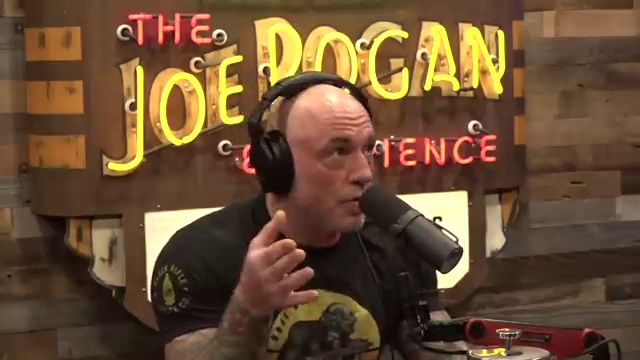
It’s just control — and you can’t allow that kind of control to be in the hands of any government body … where, because of the words out of your mouth, they can now put you in a cage.” [“That’s really crazy — and it’s dangerous!https://podcasts.video.blog/2024/12/05/thats-really-crazy-and-its-dangerous ]

In my humble opinion, every utterance (or communication) created by anyone needs to be interpreted from at least two contextual perspectives:

  1. the language that utterance / communication is expressed in [2]
  2. The legal environment that utterance / communication exists in [3]

One example which is often viewed as a hallmark event which has separated modern history from previous eras is Martin Luther’s nailing the so-called “95 Theses” to a (Roman Catholic) church door in Germany. In order to interpret this document, we must consider not only the language in which its expression was written but also the legal environment in which it was expressed. This act (commonly attributed to Martin Luther alone) is usually interpreted as the seminal act that set off the Protestant Reformation and thereby sparked numerous revolutions not only throughout Europe but indeed globally for centuries to come.

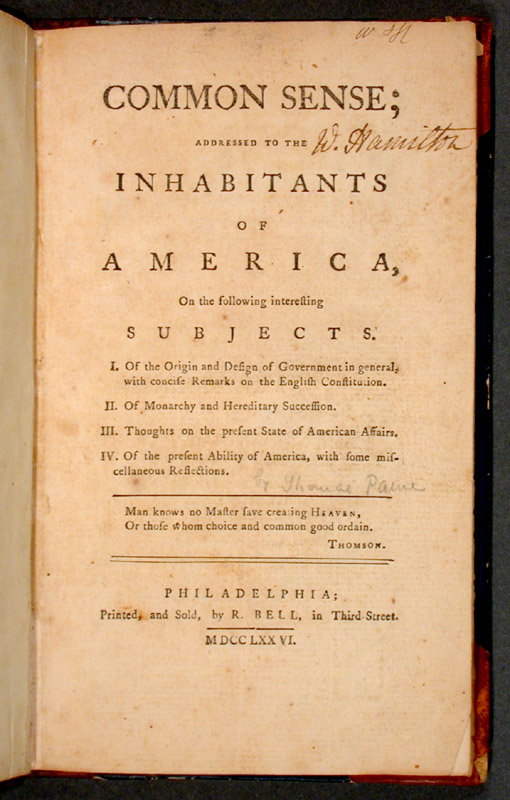
One such revolution was the so-called “American Revolution”, which happened well over two centuries later — and in a different legal environment — namely one in which the aforementioned Ben Franklin published Tom Paine’s “Common Sense” pamphlet, in which Mr. Paine argued that “In America, law is king”.

In the meantime, the world has become immensely more complex, and the notion of “Natural Law” which existed in Revolutionary America is now a quaint and antiquated relic of an entirely different legal environment than the legal environments which exist worldwide today. Today’s legal environments are immensely more diverse and multifaceted, they overlap in layers upon layers of legalese, such that the entire global legal environment is neither completely intelligible nor individually fathomable for any mere mortal human being (I even doubt that one lifetime would suffice to even read all of the relevant legal documents anywhere, let alone to begin to grok them).

What the world needs most of all now (again: in my humble opinion) is to simplify. Our new millennium ought to become an era of stepping back from legal documentation, and moving forward to interpersonal understanding. Now, more than ever, we need to look each other in the eyes and work towards mutual understanding.

Lastly (for now — and yet again in my humble opinion) this pretty long plea is probably much easier said than done. Yet even the longest and most difficult trip begins with taking the first step … and I have a hunch that first step may very well have something to do with us engaging in a collaborative attempt to subscribe to each other’s views, with not giving up and instead remaining steadfast, persistent, engaged and diligently working towards the intermediate goals we choose to focus on in order to help us achieve our dreams of lasting success.
[1] For more discussion about this topic, consider also “NoAgenda 1716” [starting @ 39:00 “I always admire people like this who can look at something and immediately see things nobody else can see.” https://www.noagendashow.net/listen/1716?t=39:00 ]
[2] See e.g. Indigenous News — e.g. “Propaganda Information Technology vs. Indigena Information Technology — the Basic Idea” [ https://indigenous.news.blog/2022/05/07/propaganda-information-technology-vs-indigena-information-technology-the-basic-idea ]
[3] For example: natural language deserves special consideration, insofar as it is the medium in which “free speech” is particularly concentrated. For more about this, see also “Rational Media” [ https://phlat.design.blog/2024/01/14/rational-media ]
Feature image source: https://en.wikipedia.org/wiki/Common_Sense

Introduction to Rational Media: Content vs. Container

Over the years, I have written quite a bit about online media — and most of it seems to be quite controversial. Perhaps one of the most controversial stories I have written has been the story about what I refer to as “outdated media” [1] technology (which I wrote on what is essentially my own “personal” blog). The definition of this more-or-less controversial term has held up quite well, and now I would like to begin delving into the other side of the coin.

I am immediately motivated by the encouragement of an aspiring educator who said she looks forward to “reading more of your thoughts related to this topic” (meaning the topic of “building connections“). Language builds connections — insofar as it is meaningful. Following Ludwig Wittgenstein’s observations, we can say that the meanings we create by using language are mostly circumscribed by those contexts in which we use particular linguistic expressions (versus other contexts, and / or other expressions, respectively): we do not say “cat” when talking about a dog; we do not say “dog” when talking about a cat.

Meaningful expressions exist at various levels. We navigate these contexts without even needing to think about it. Perhaps one of the best examples of this is Herbert Paul Grice’s seminal work on pragmatism (“Logic and conversation”, 1975) — in which he analyzed the meanings of expressions that seem to violate standard (“grammatical”) interpretations. Yet much research in linguistics oddly aims to be “context-free”, which seems to fly in the face of how humans seem to naturally think. To ignore context makes about as much sense as trying to breathe in a vacuum.

My particular focus is primarily written language, another favorite point of ignorance among many more conventional linguists. One particularly interesting aspect of most writing systems is that the technology has evolved to support very explicit contextual information. In school, we learned to write “about” stuff by putting a title above what we wrote. If the title was something like “The difference between cats and dogs” (well, that sounds quite definitive, doesn’t it? maybe it would show more humility to use a title like “Some of the differences between cats and dogs which I think are important right now”, but I expect many might instead coach students to be more straightforward, to forthrightly simply declare something like “Cats & Dogs”) … with such titles a reader reasonably expects to find some particular kinds of information — and by reasonable you might even think “rational”. Rational media, therefore, is about something meaningful… and the thing it’s about is clearly labeled in the title.

Online, these titles are the names of sites — not “page titles”. A page title is merely a piece of metadata about an HTML page. A site is the container for content — in other words: its context.

[1] see also “Hope & Change: Flipping the F-word & Removing the Old-Fashioned R-word